It sounds strange. But the clinical research — and tens of thousands of users — say it's one of the simplest ways to sleep deeper, snore less, and wake up feeling restored.
Let's Be Real
Let's address the elephant in the room
Yes, taping your mouth shut at night sounds bizarre. Maybe even a little unsettling. We get it — most people have that reaction the first time they hear about it.
But here's the thing: mouth taping isn't some fringe wellness trend. It's rooted in respiratory physiology that's been understood for decades. The basic premise is simple: humans are designed to breathe through their nose, especially during sleep. When we don't, things start to go wrong.
The question isn't really whether nasal breathing is better — that's well established. The question is whether a small piece of tape can actually help you do it consistently at night. And that's where the research gets interesting.
The Evidence
What the clinical research says
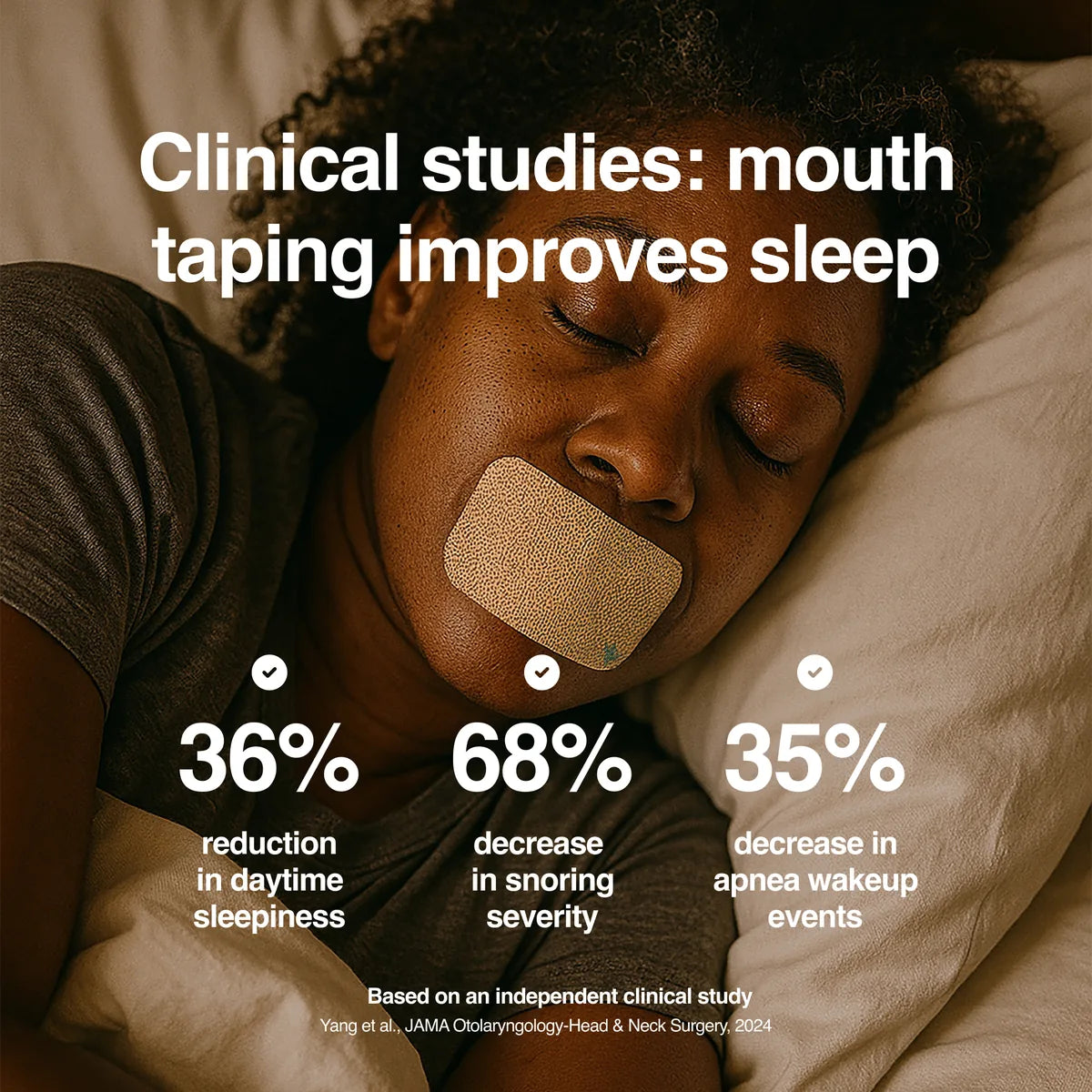
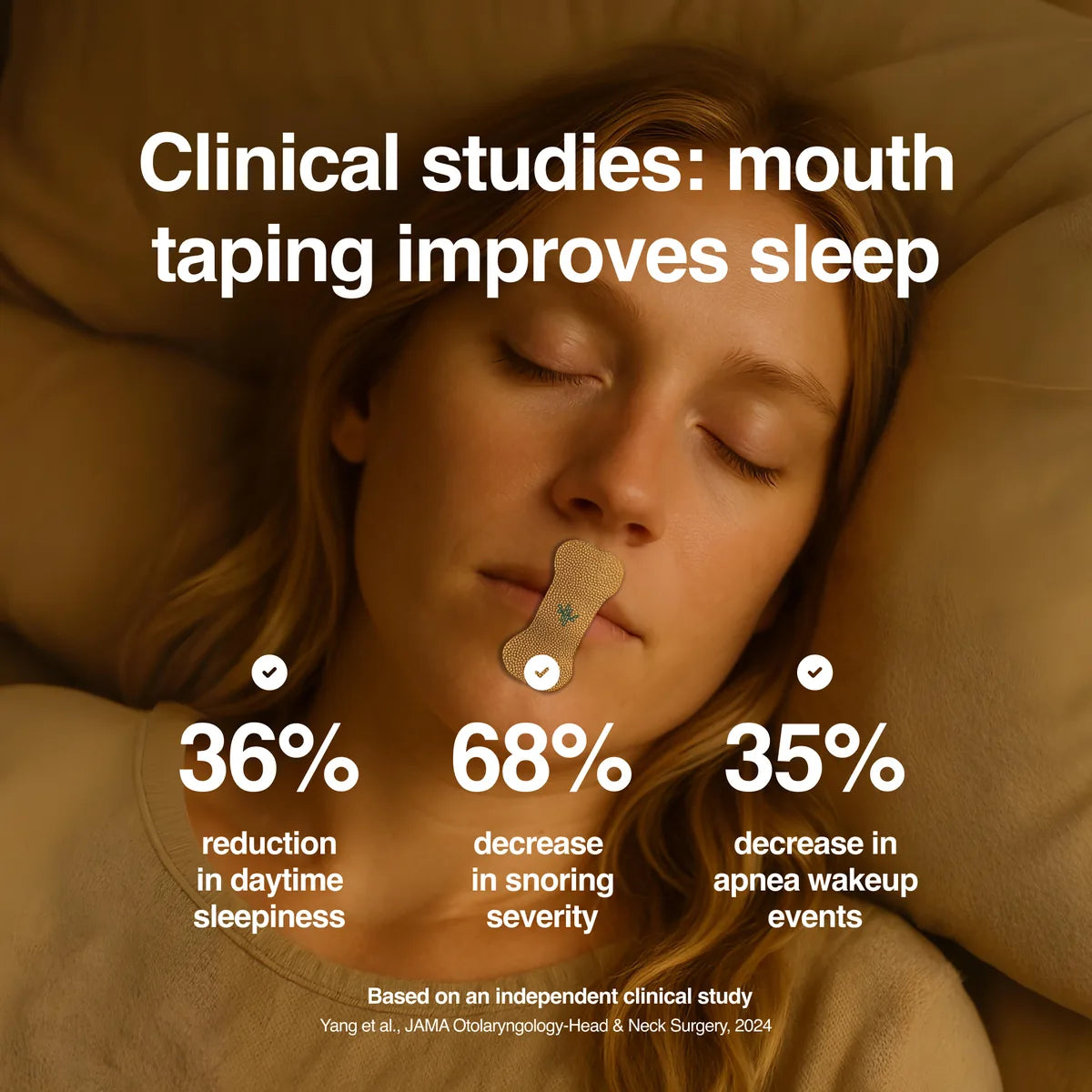
Multiple studies have examined what happens when people switch from mouth breathing to nasal breathing during sleep. The results are consistent and, frankly, more dramatic than you'd expect from something so simple.
0%
reduction in snoring index
Lee et al., Healthcare (MDPI), 2022
0%
fewer apnea & hypopnea events per hour
Lee et al., Healthcare (MDPI), 2022
0%
improvement in oxygen desaturation index
Lee et al., Healthcare (MDPI), 2022
These aren't marginal improvements. A 47% reduction in snoring and 43% fewer apnea events — from a single change in how you breathe. And the mechanism behind it is surprisingly straightforward.
Ready to feel this difference? Sleep Karma is designed for exactly this.
The Mechanism
Why nasal breathing changes everything
Your nose isn't just an air hole — it's a sophisticated filtration and conditioning system. When you breathe through your nose during sleep, several important things happen that don't occur with mouth breathing:
🧬
Nitric oxide production
Your nasal passages produce nitric oxide, a molecule that improves oxygen absorption in the lungs. This means every breath delivers more oxygen to your tissues, supporting deeper and more restorative sleep cycles.
+10-15% oxygen absorption
💨
Air conditioning
Nasal breathing humidifies and warms incoming air before it reaches your lungs. Mouth breathing skips this entirely, leading to dry mouth, sore throat, and irritated airways — all of which fragment your sleep without you realizing it.
🧠
Nervous system regulation
Nasal breathing activates the parasympathetic nervous system — your body's "rest and digest" mode. Mouth breathing does the opposite, keeping your nervous system in a subtly activated state that prevents deep sleep.
When breathing stabilizes, sleep often becomes deeper and more continuous. It's not that sleep is broken — it's that breathing patterns have drifted away from how the body is designed to rest.
— Based on respiratory physiology literature on nasal breathing and sleep architecture
Nasal vs. mouth breathing — the difference happens before air reaches your lungs
Ready to Try?
Try Sleep Karma tonight
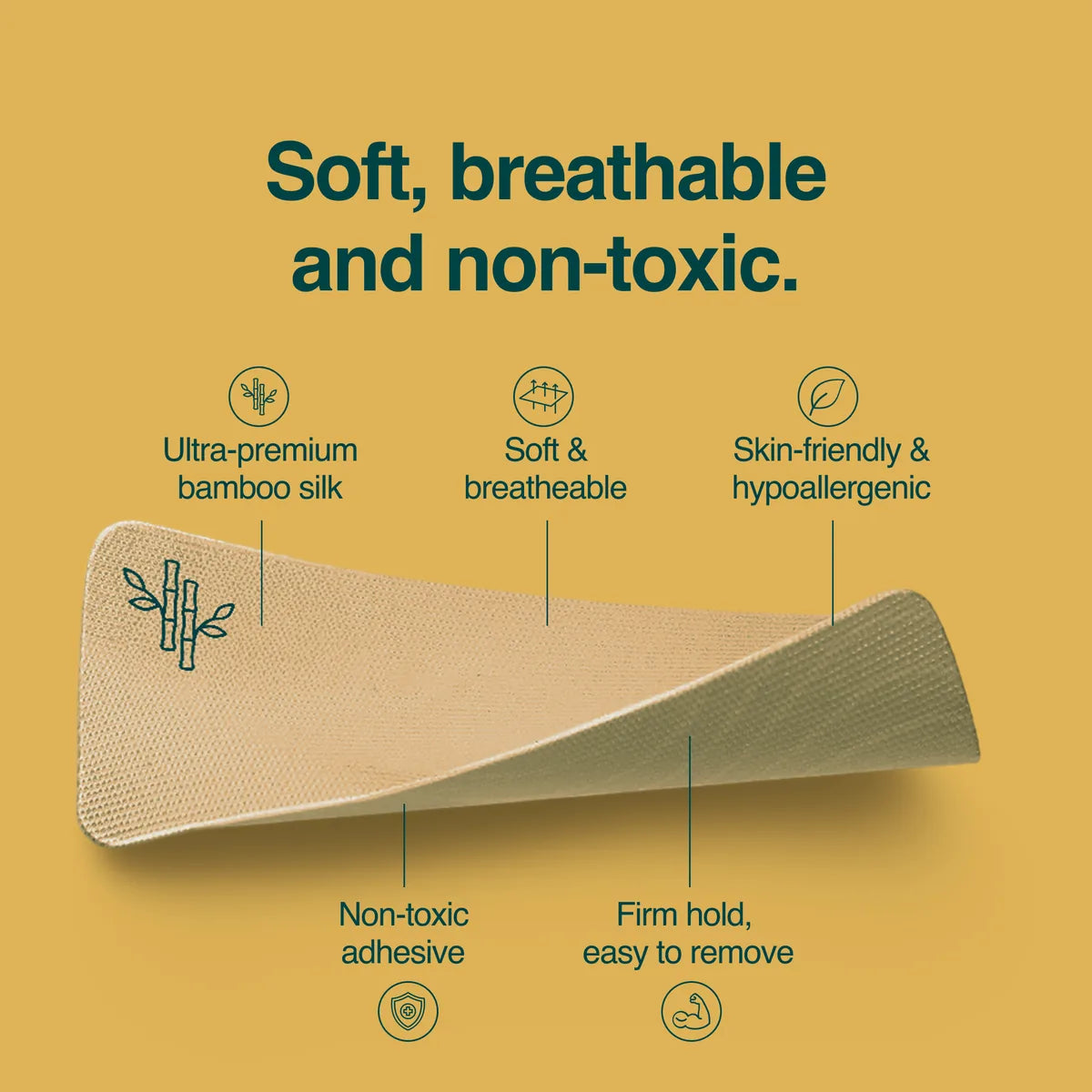
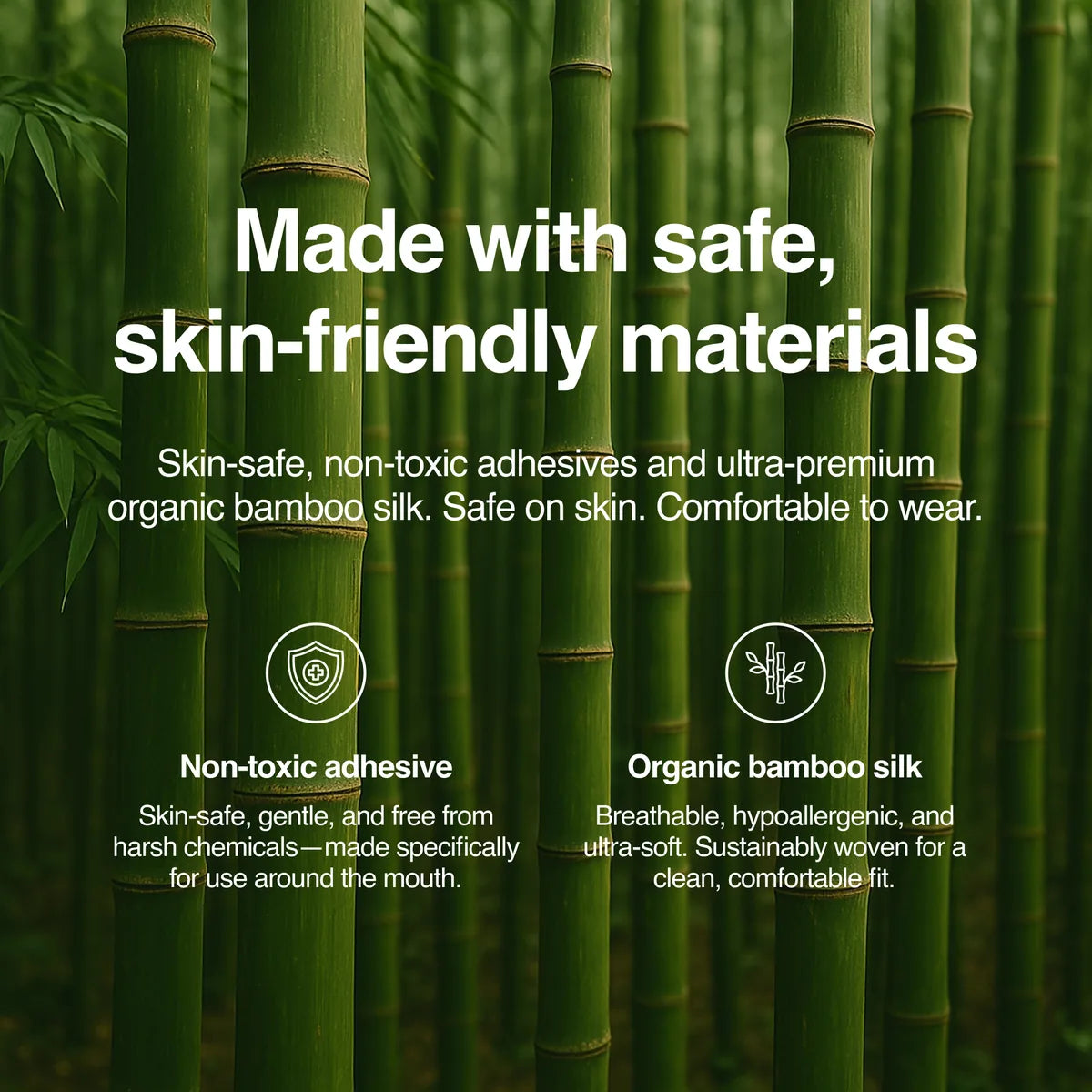
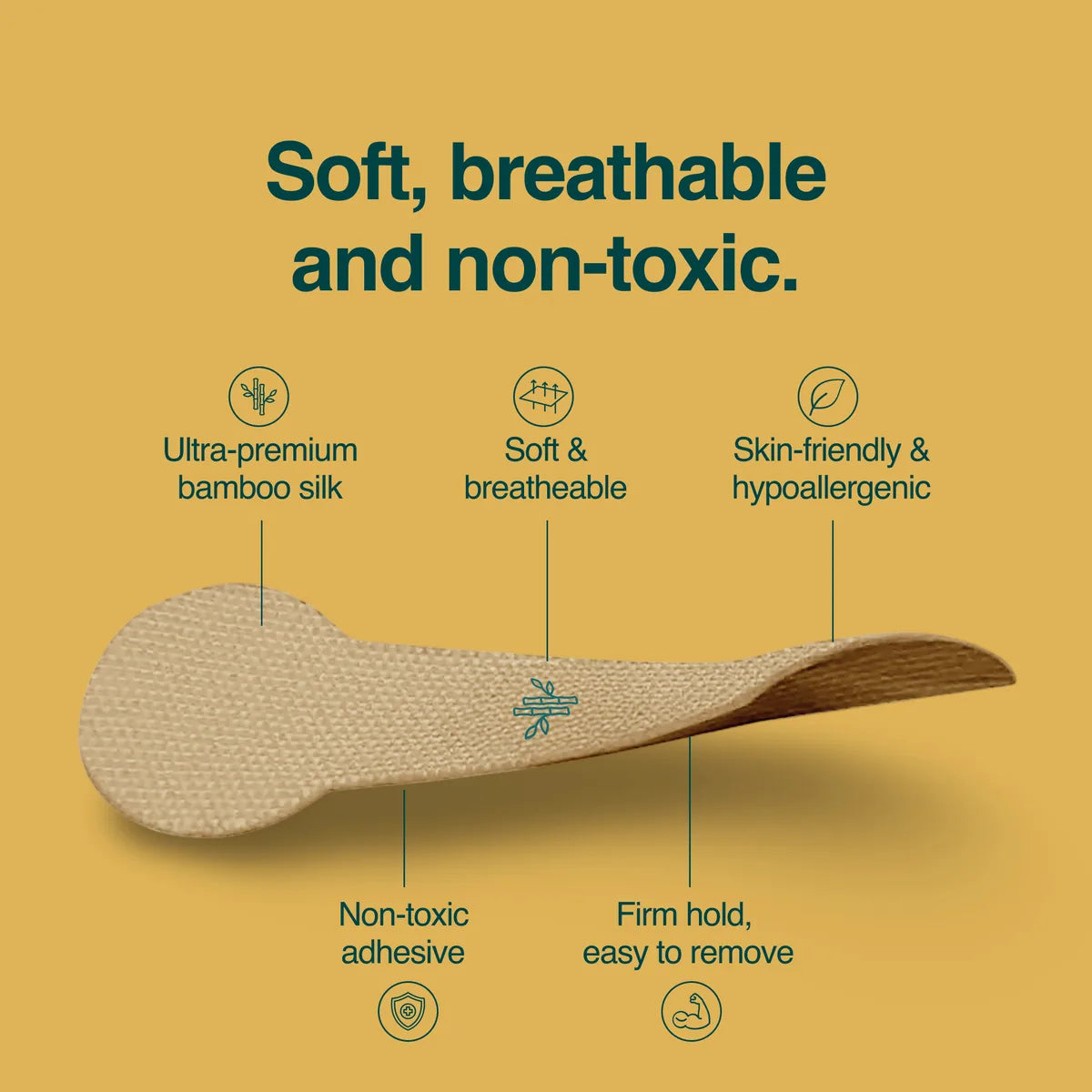
Medical-grade bamboo silk tape. Non-toxic adhesive. Designed for nightly nasal breathing — without the irritation.
The Root Cause
So why do we mouth breathe in the first place?
Here's what most people don't realize: modern life has quietly changed how we breathe — especially at night. Chronic stress, poor posture, processed diets, allergies, indoor living, and even generational changes in jaw development have all contributed to more mouth breathing and less stable nasal breathing.
You might sleep with your mouth open and not even know it. The most common signs are waking with dry mouth, sore throat, morning brain fog, or that frustrating feeling of being tired after a "full" night of sleep. If any of that sounds familiar, your breathing pattern at night is probably working against you. Discover all 7 reasons people are switching →
Ready to Try?
Sleep Karma mouth tape is medical-grade, gentle enough for sensitive skin, and backed by a 90-day guarantee.
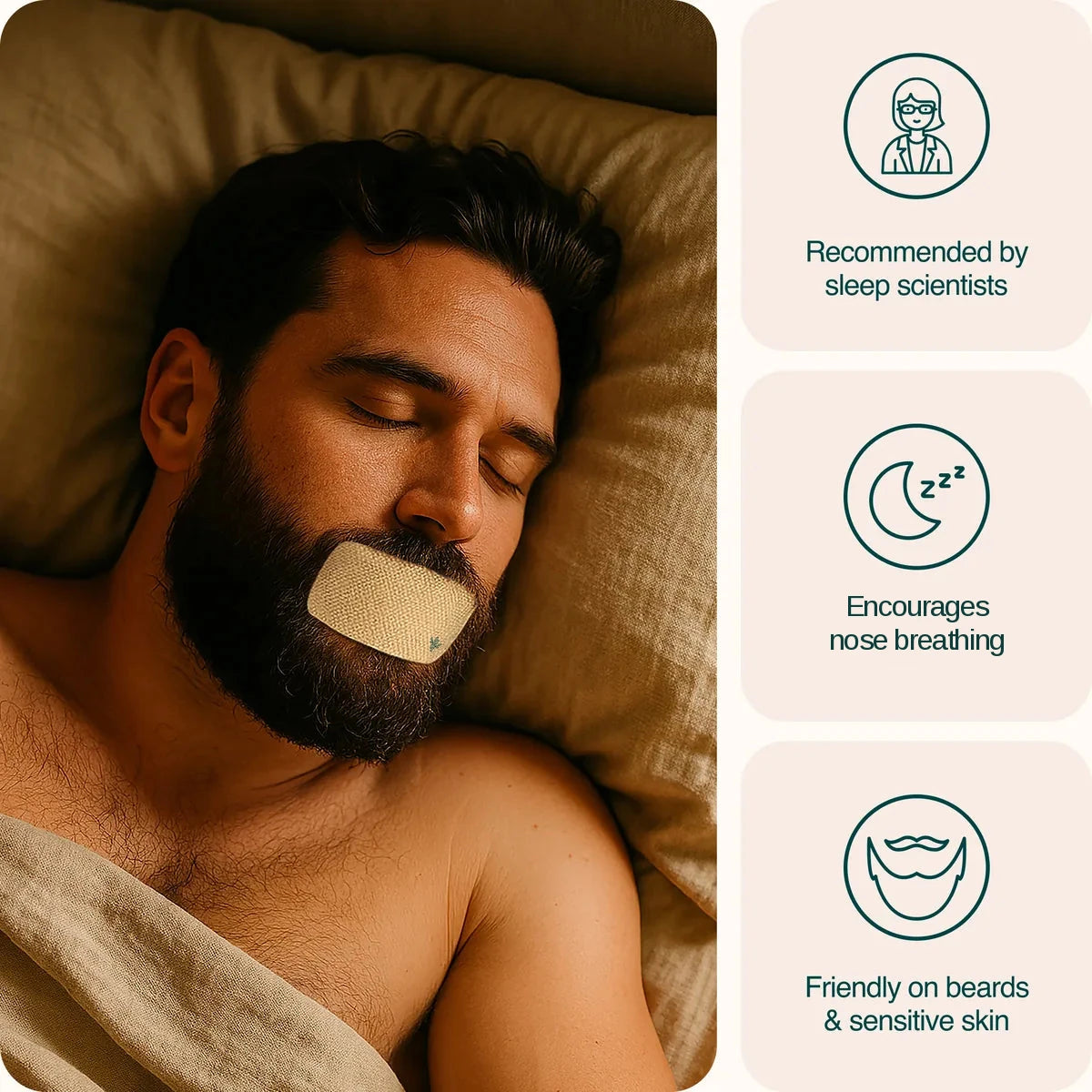
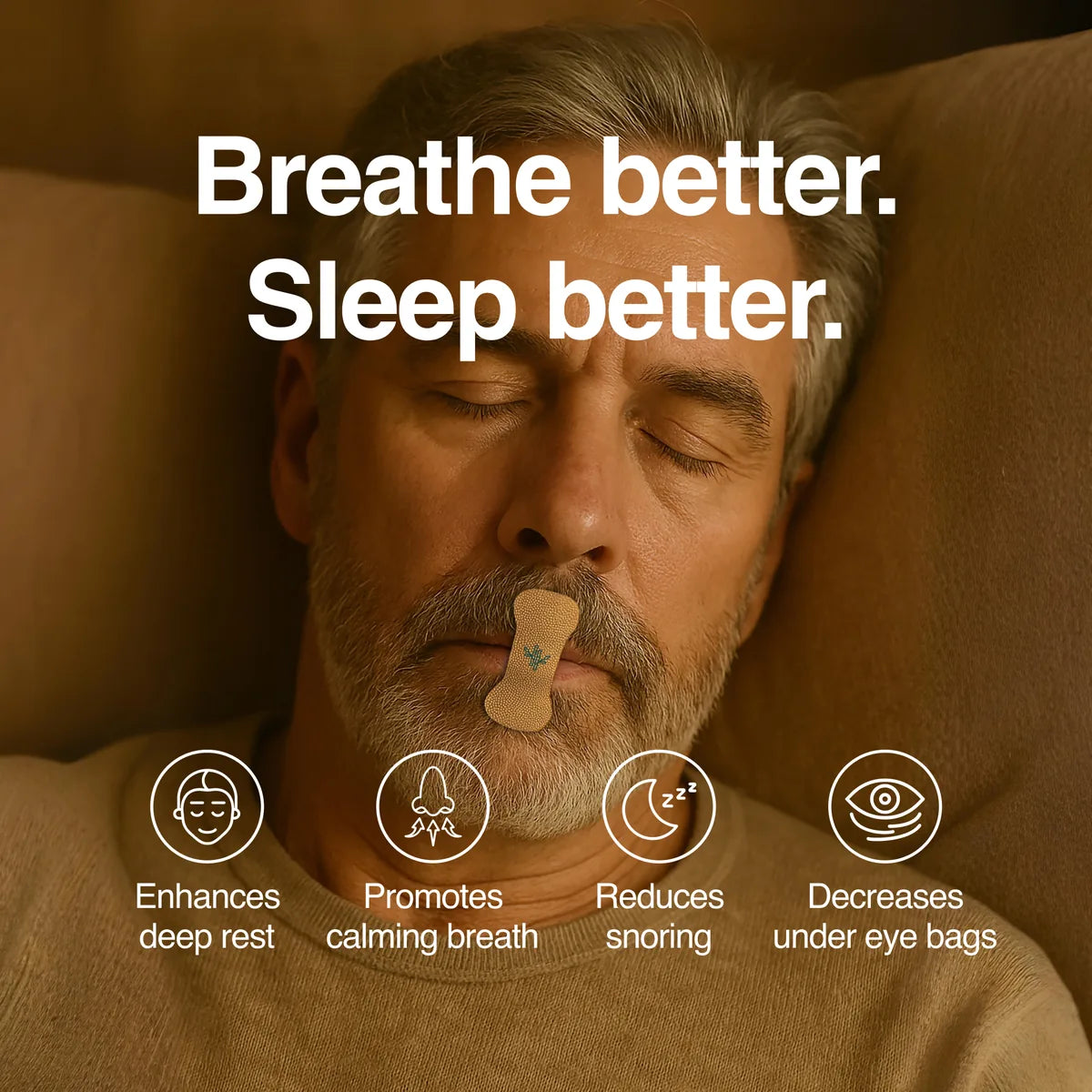
The concept is dead simple. A gentle, breathable tape seals your lips during sleep, encouraging your body to breathe through the nose all night. That's it. No devices, no apps, no supplements — just a return to how your body was designed to breathe.
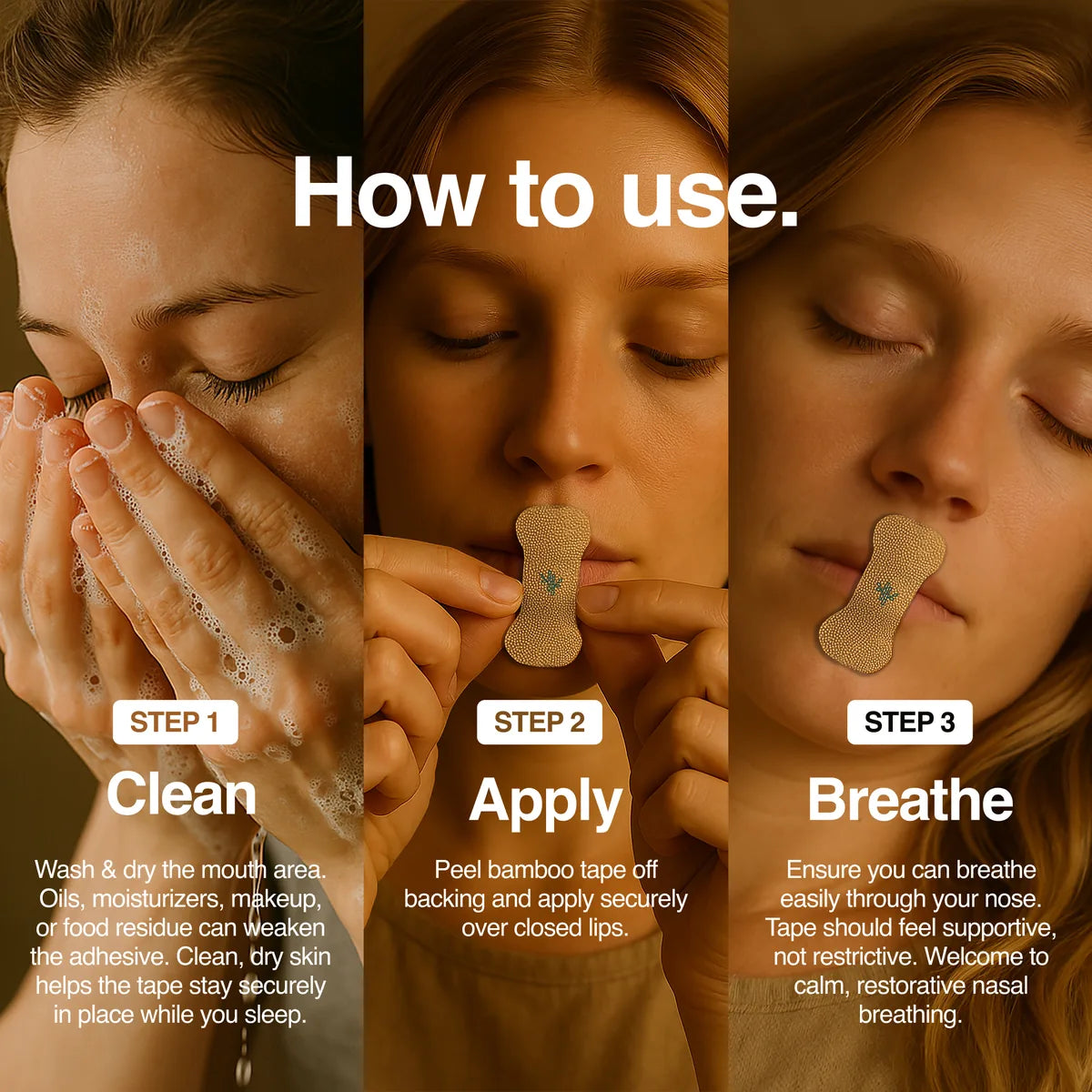
Step 1
Clean and dry the skin around your mouth
Remove any moisturizer or lip balm. The tape adheres best to clean, dry skin.
Step 2
Gently press your lips together and apply
Center the tape over your lips and smooth outward. It should feel secure but not restrictive.
Step 3
Breathe through your nose and drift off
Take a few calm nasal breaths. Most people are surprised by how natural and calming it feels.
Your Questions, Answered
Common concerns about mouth taping
We hear the same questions over and over. Here are the honest answers — no hype, just the facts.
This is the most common concern, and it's completely valid. Here's the reassuring truth: you can always remove the tape. It peels off gently with zero effort. If your nose becomes congested, you'd simply open your mouth and the tape releases.
Most first-time users report that it feels unusual for about 10 minutes, then they forget it's there. By the second or third night, it becomes as natural as wearing socks to bed.
For the vast majority of people, yes. Mouth taping is a gentle intervention — it's not sealing your mouth shut. The tape is breathable, easy to remove, and designed to sit lightly across the lips. If you can comfortably breathe through your nose while awake, you're likely a good candidate.
That said, it's not for everyone. Always consult a healthcare professional if you have any underlying respiratory conditions.
Yes. The benefits of nasal breathing are well-documented in respiratory physiology literature. Clinical studies have demonstrated measurable improvements in snoring reduction, sleep architecture, and blood oxygen levels when nasal breathing is maintained during sleep.
Mouth taping is simply the delivery mechanism — it keeps your mouth gently closed so your body defaults to nasal breathing. The science isn't about the tape. It's about what happens when you breathe the way your body was designed to.
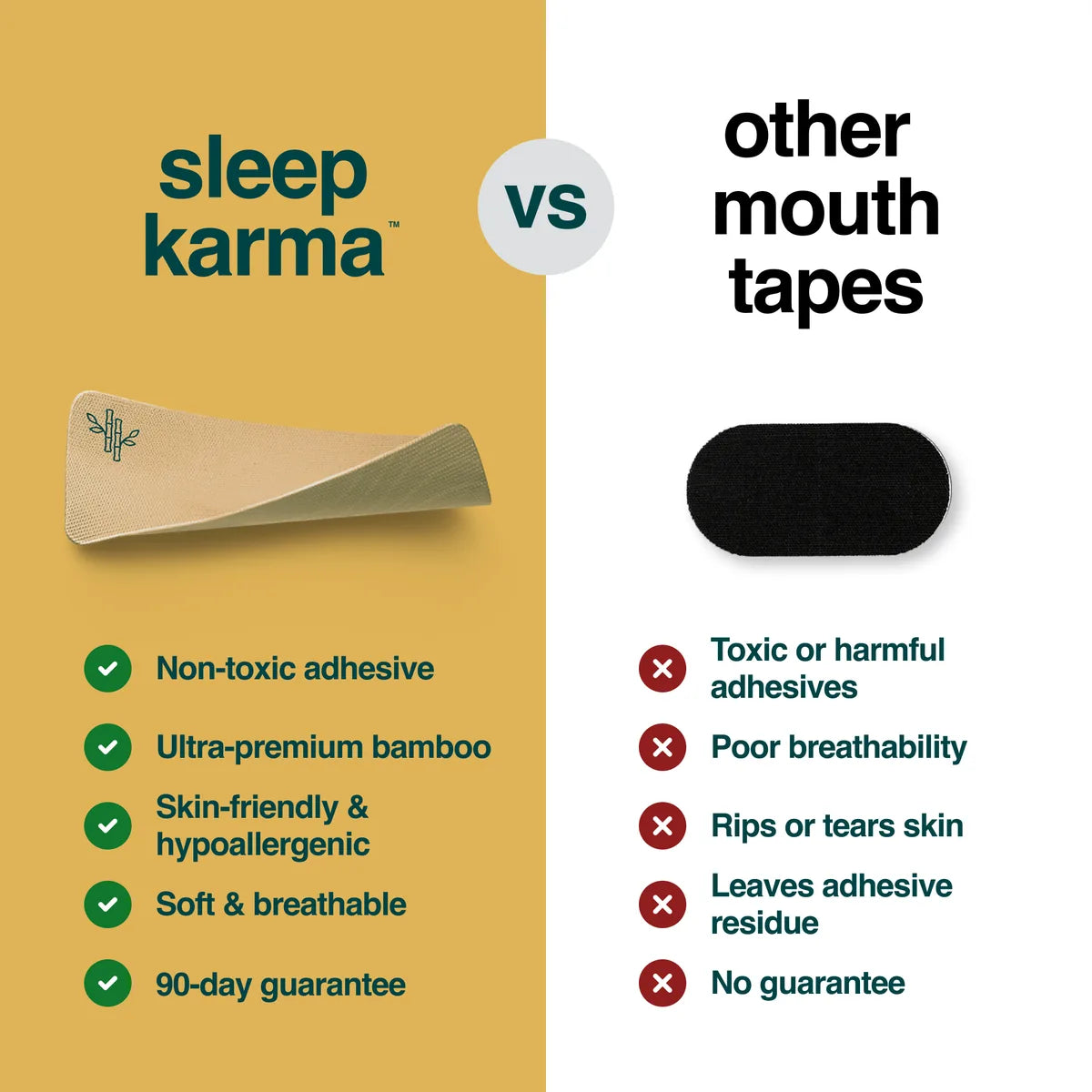
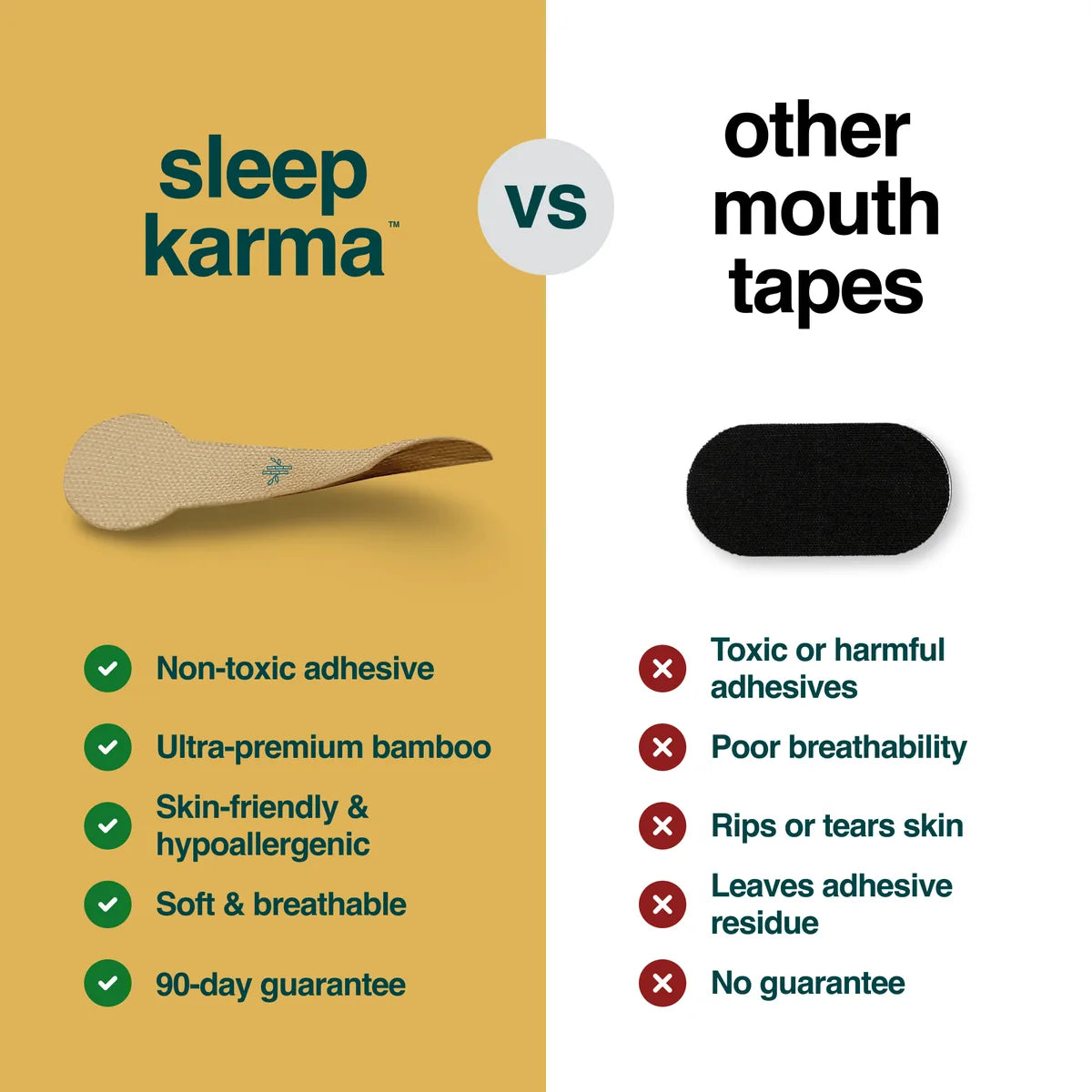
Not with the right tape. Many generic tapes use adhesives designed for packaging or athletic purposes — not for nightly facial skin contact. That's a problem.
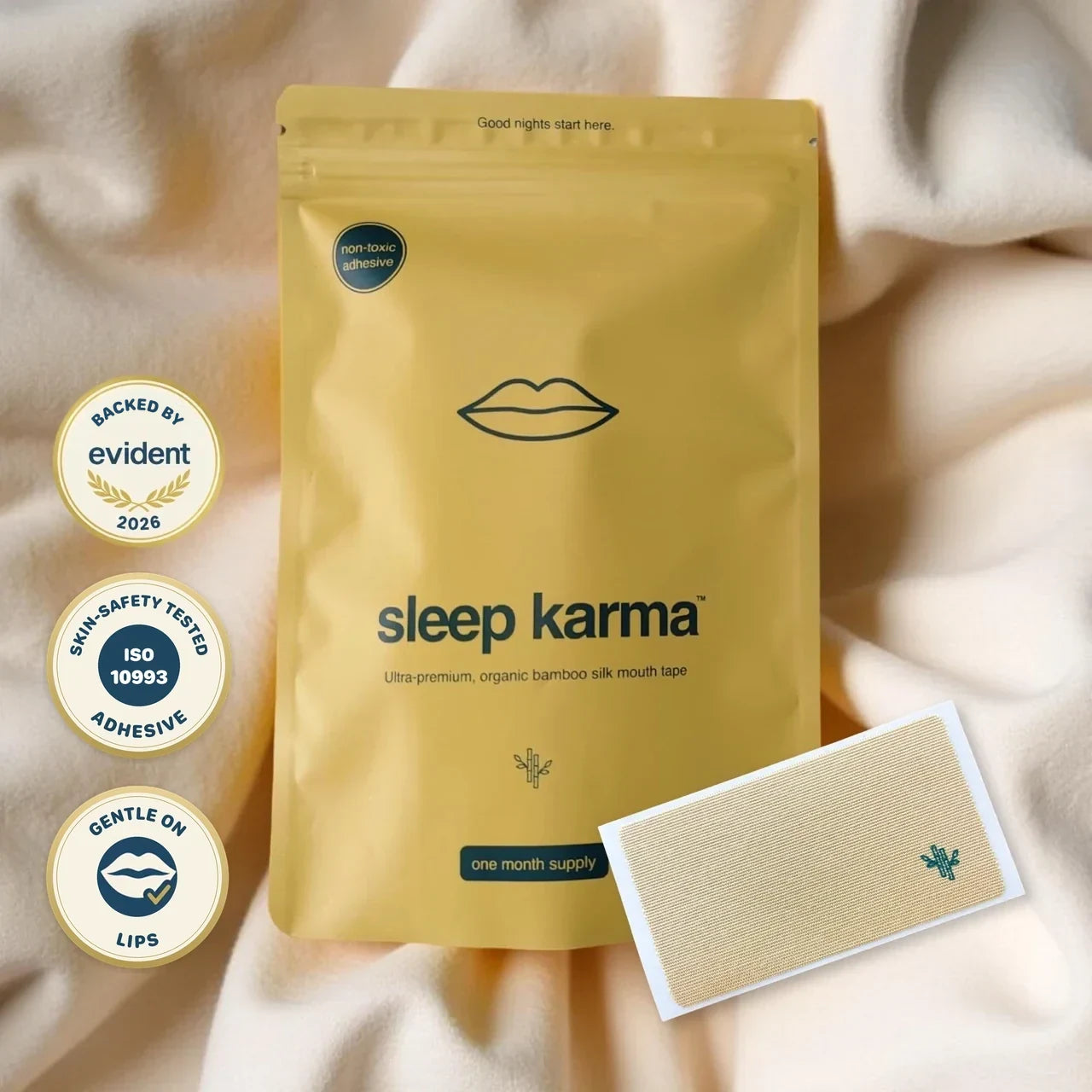
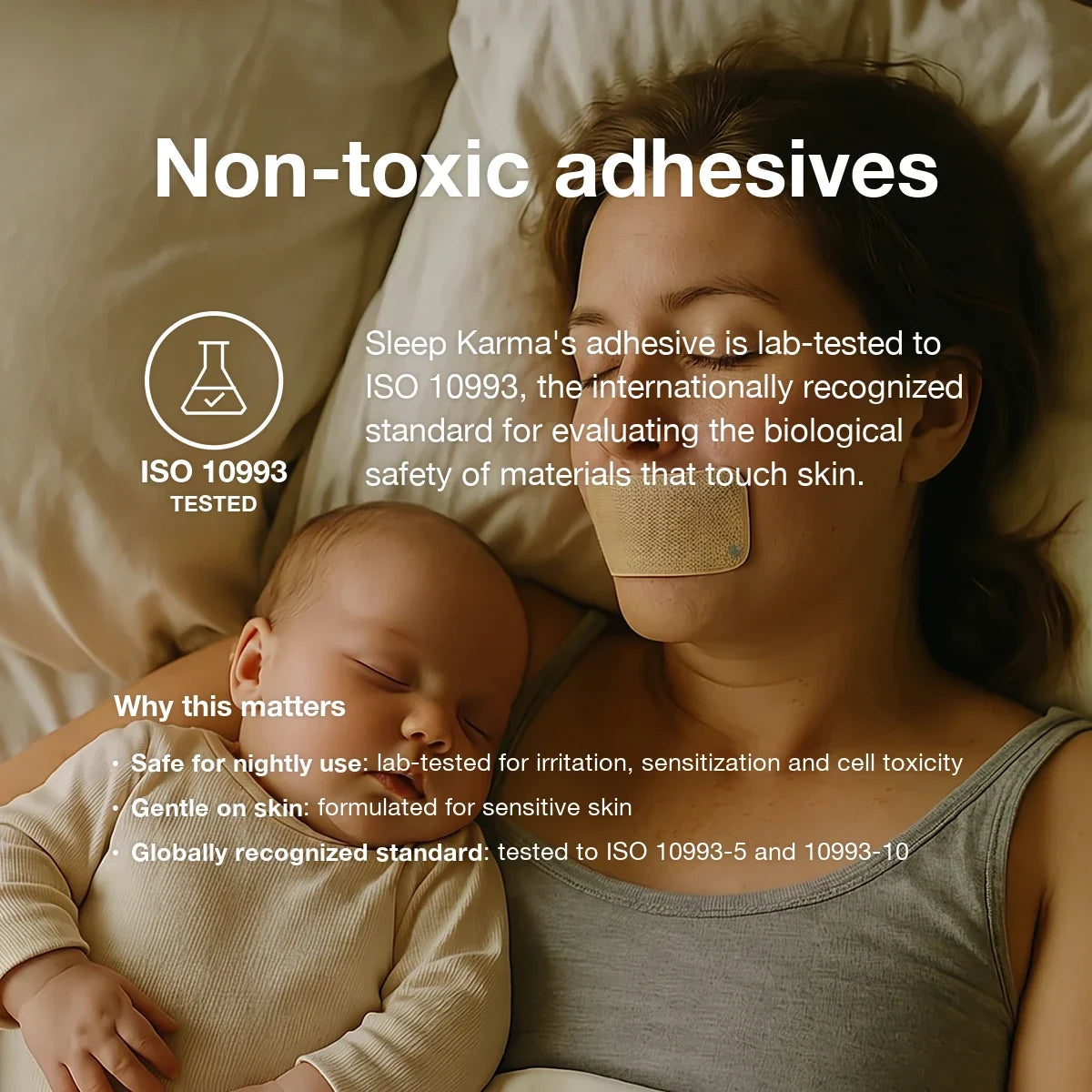
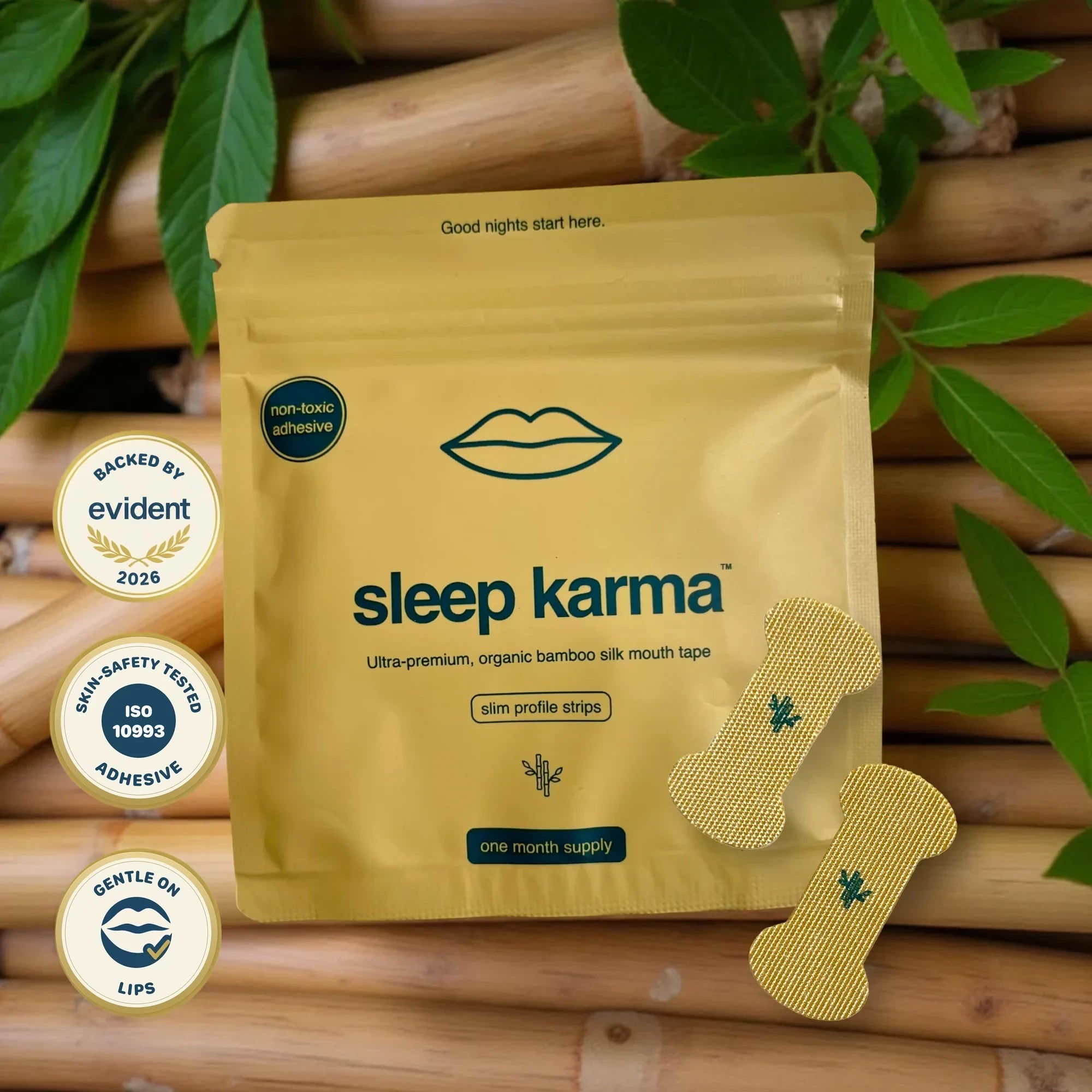
Sleep Karma uses a medical-grade adhesive, lab-tested to ISO 10993 paired with ultra-premium bamboo silk fabric. It's engineered specifically for the sensitive skin around your lips — strong enough to hold all night, gentle enough for reactive skin, and removes cleanly with zero residue. See our full material specs →
⚠️
Who should NOT try mouth taping
People with untreated moderate to severe sleep apnea
Anyone with significant nasal obstruction or chronic congestion
People unable to comfortably breathe through their nose while awake
If pregnant or have underlying conditions, consult your healthcare provider first
What to Expect
When will I notice results?
Night 1
Immediate difference
Less dry mouth and throat. Partners often notice reduced snoring from the very first night.
Week 1
Sleep shifts
Waking up less during the night. Less groggy mornings. Less caffeine needed to function.
Month 1+
Compounding gains
Better energy, improved focus, clearer skin, reduced puffiness. Every system benefits from deeper rest.
Not all mouth tapes are created equal. Many use generic adhesives originally designed for packaging or athletic use — not for nightly contact with the sensitive skin around your lips.
Sleep Karma uses a medical-grade adhesive, lab-tested to ISO 10993 paired with ultra-premium bamboo silk fabric. It's engineered specifically for facial skin — strong enough to hold all night, gentle enough for sensitive or reactive skin, and removes cleanly without residue. Full material breakdown →
The bottom line
Mouth taping works because nasal breathing works. The clinical evidence is robust, and the anecdotal evidence from the growing community of mouth tapers is overwhelming. The tape itself is just a simple, low-risk tool that helps your body do what it's designed to do.
The hardest part is getting past the initial "this is weird" reaction. After that, most people wonder why they didn't try it sooner. Hear from real users →